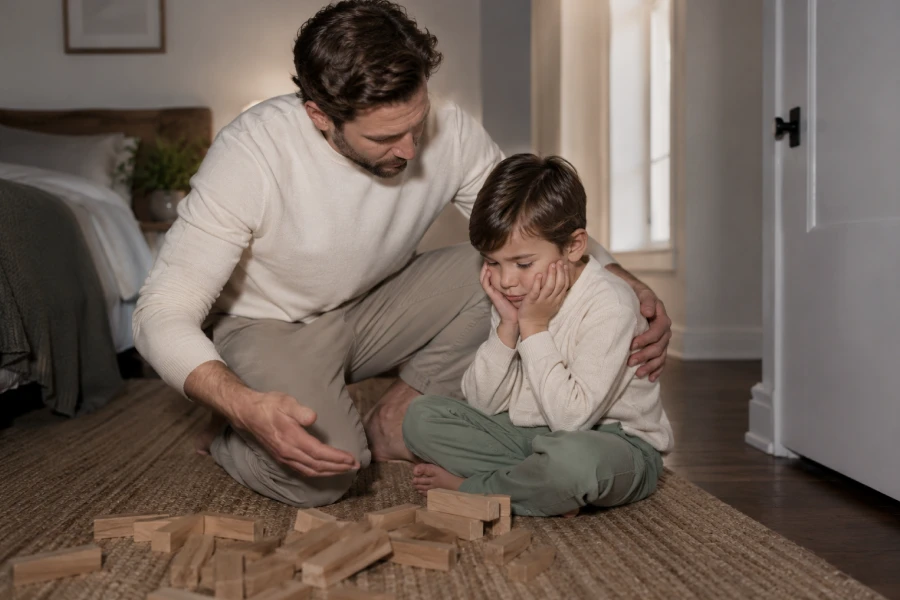
Parents often search for how to help child deal with disappointment when a small setback suddenly feels enormous. A canceled plan can bring tears. A lost game can feel personal. A missed invitation can hurt deeply. Children are still learning how to carry unmet expectations. Adults may want to fix the feeling quickly. Yet fast reassurance can sometimes feel dismissive. The better path begins with presence. Disappointment needs room before solutions appear. Children grow stronger when they feel understood first.
Validation tells a child their feelings make sense. It does not mean agreeing with every reaction. It means recognizing the emotional truth underneath. A child who feels seen can calm more easily. Say the moment feels hard. Name the disappointment plainly. Avoid telling them it is not a big deal. It is a big deal to them right now. Parents can use emotional resilience support to shape these responses. Validation opens the door to learning.
Many disappointments improve after the first emotional wave passes. Children need practice waiting through that wave. Parents can sit nearby without lecturing. A quiet presence often works well. Some children want a hug. Others need space before talking. Respecting that difference builds trust. When the child softens, problem-solving becomes easier. The timing matters more than the perfect phrase. Waiting teaches that feelings rise, peak, and pass.
Coping grows through repeated, supported practice. A disappointed child learns from each manageable setback. The adult’s role is to stay steady. This does not remove the challenge. It makes the challenge safer to face. Encourage breathing, naming feelings, or taking a short break. Offer one skill at a time. A child disappointment strategy can make these steps easier. Skills become familiar through repetition. Familiar skills become usable during harder moments.
Empathy and boundaries can exist together. A child may feel upset and still need respectful behavior. Parents can acknowledge the feeling while limiting hurtful words. This teaches emotional responsibility. It also prevents shame from entering the lesson. Say that anger is allowed. Hitting, insulting, or throwing is not allowed. Keep the boundary brief and clear. Children learn that feelings are welcome, while unsafe behavior is not. This distinction supports maturity over time.
Flexible thinking helps children find another path. It should come after emotional validation. Ask what might help now. Offer two realistic choices. This gives the child agency without overwhelming them. A backup plan can restore hope. Children also learn that disappointment does not end the story. Parents can introduce coping tools for children when the moment is calmer. Flexibility develops slowly. Each new attempt strengthens the habit.
Growth does not mean forcing a lesson too soon. Children dislike being coached while they are hurting. Wait until the moment settles. Then reflect gently on what helped. Ask what they might try next time. Celebrate effort rather than instant recovery. Resilience is not the absence of tears. It is the ability to return after difficulty. Small setbacks become practice fields for bigger life skills. With support, disappointment becomes less frightening.




Leave a comment